In my previous article, When a Sentence Moves a Machine, I followed a short sentence as it moved through software, checks, and flight control. The language model could propose an action, the application could check it, and the flight controller remained responsible for the aircraft. That article was about what happens when software reaches a real machine. This one starts one step earlier: before a sentence can move a machine, the machine has to be understood.
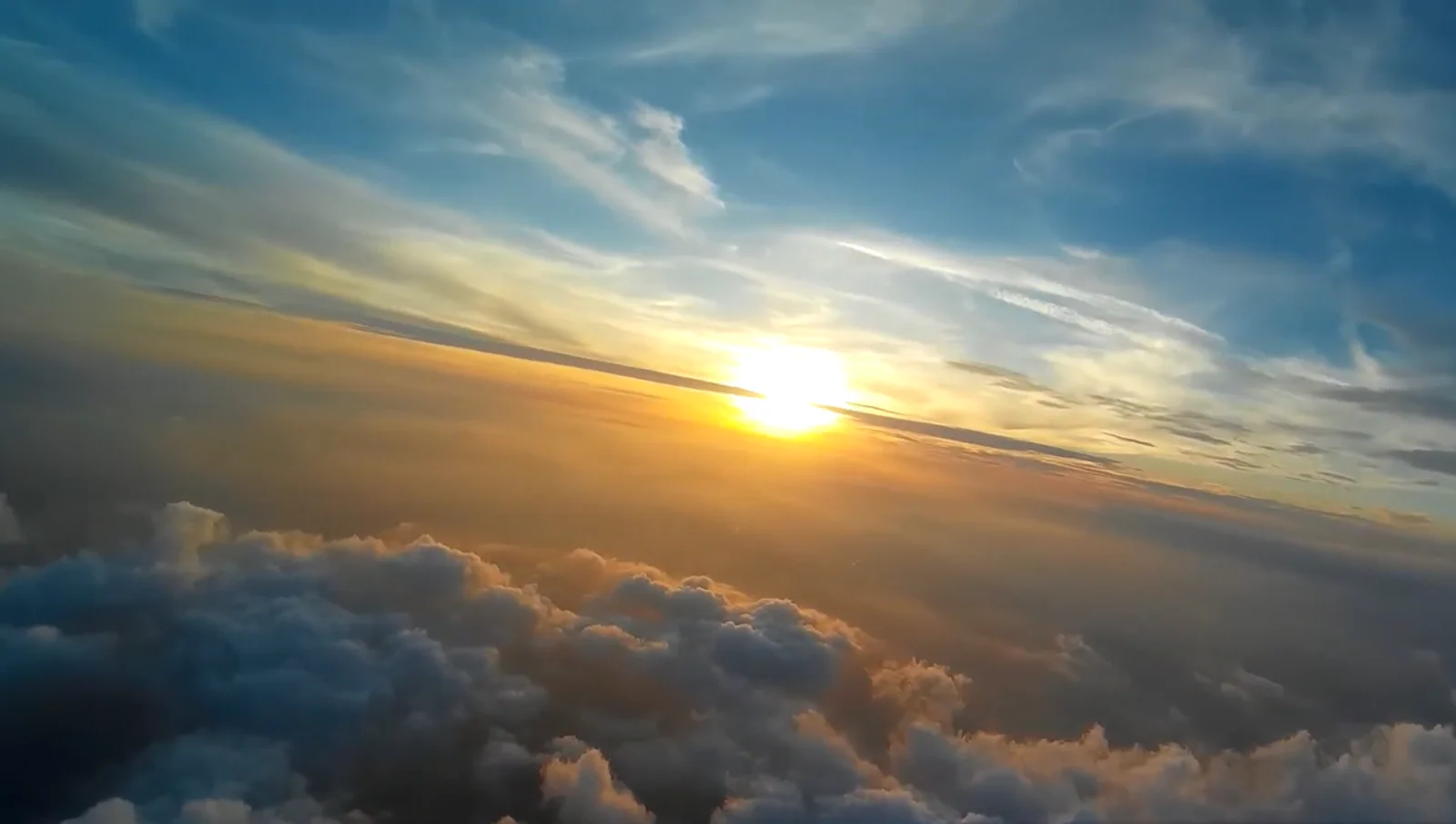
This image was not generated by AI. It is a frame from a real flight.
The aircraft in this story is an unmanned aircraft, also called an unmanned aerial vehicle (UAV). In everyday language, it is a drone. It was not built with the latest generation of components. Some of its main parts are more than ten years old. During the test, the UAV went beyond 20,600 feet (6,285 metres). During a second mission, it reached 23,500 feet (7,173 metres).
The altitude is impressive, but it is not the most important part of the story. The interesting part started before take-off.
The UAV came first #
As in the previous article, the aircraft came before the AI work. I had to assemble it, check it and understand how its different parts worked together. I needed to know what the UAV could do, where its limits were and which parts of the setup could affect the mission.
This order matters. AI can help analyse a system, but it cannot replace knowledge of the real machine. A suggestion only becomes useful when it is connected to a specific UAV, a specific environment and a specific objective. The mission was not simply to fly higher. It was to understand whether an older drone could be prepared for a very different operating condition.
AI as a setup tool #
In this mission, AI did not control the UAV and it did not create the image. It worked before the flight.
I used it to explore the setup and compare possible ways of preparing the drone for the mission. The questions included altitude, distance, aircraft orientation, radio communication and the available safety margin. AI also suggested antenna configurations outside our normal choices. That was one of the most useful parts of the exercise.
The aim was not to find a magic component or select the most impressive specification. It was to question assumptions that had become familiar through habit. Some options would probably not have been considered without that external point of view.
AI did not make the old hardware new. It helped us look at the same hardware in a different way.
Distance is part of the design #
The UAV used a point-to-point radio link. In simple terms, this means a direct connection between the drone and the ground station.
The important question was not only how far the radio could reach in ideal conditions. It was how to keep the connection usable while the UAV moved away, changed position and changed attitude. Distance was therefore not just the result of the flight. It was part of the mission design.
The location of the ground station mattered. The route mattered. The orientation of the UAV mattered. The way the antennas were used mattered. At high altitude, small differences can become important. A setup that works well in one direction may behave differently when the drone turns or moves across a wider area.
This is why communications cannot be treated as an accessory added at the end. The radio link is part of the UAV’s operating environment.
Context before specifications #
Technology discussions often focus on individual components: a faster processor, a newer sensor, a more powerful radio or a better battery.
These improvements can be useful, but a drone does not fly because of one component. It flies because the structure, control system, power supply, sensors, communications and mission work together.
An older component can still be effective when its behaviour is understood and its limits are known. The real question is not whether a component is old. The real question is whether it still fits the task.
A component can be more than ten years old and still have a useful role. What matters is the context in which it is used and the way it fits with the rest of the UAV.
A lateral answer to a familiar problem #
The result did not come from one special part. It came from looking at the problem from more than one direction.
The usual approach would have been to replace older components with newer ones. That may sometimes be the right choice. In this case, it was not the first question. The first question was whether the existing UAV had been configured in the best possible way for the mission.
AI helped with that question. It brought a lateral view to a problem that could easily have been treated as a simple hardware upgrade. It suggested alternatives, but it did not make the final decision. That still required engineering knowledge, practical judgement and a real test.
This distinction is important. AI can expand the number of options we consider. It cannot remove the need to understand the consequences of those options.
The method is the result #
This test does not prove that old technology is always better. It shows that the age of a component does not define the value of the whole system.
A UAV built with older hardware can still reach an unexpected result when the context is understood, the limits are respected and the parts are made to work together. The most modern part of the setup was not necessarily an electronic board. It was the method.
The mission was defined before the flight. The communication link was considered together with the distance. AI was used to challenge familiar choices. The final configuration was then tested in real conditions.
That approach does not create a universal recipe. A different UAV, a different environment or a different distance could require a different answer. But it shows where useful innovation can come from: not always from replacing everything, but from understanding what is already there, asking a better question and having the courage to consider an answer that would normally be ignored.
The previous article asked how a sentence can move a machine. This one asks what must happen before the machine is ready to move.
The UAV reached twenty thousand feet with technology that was already old. The new part was the way we looked at it.