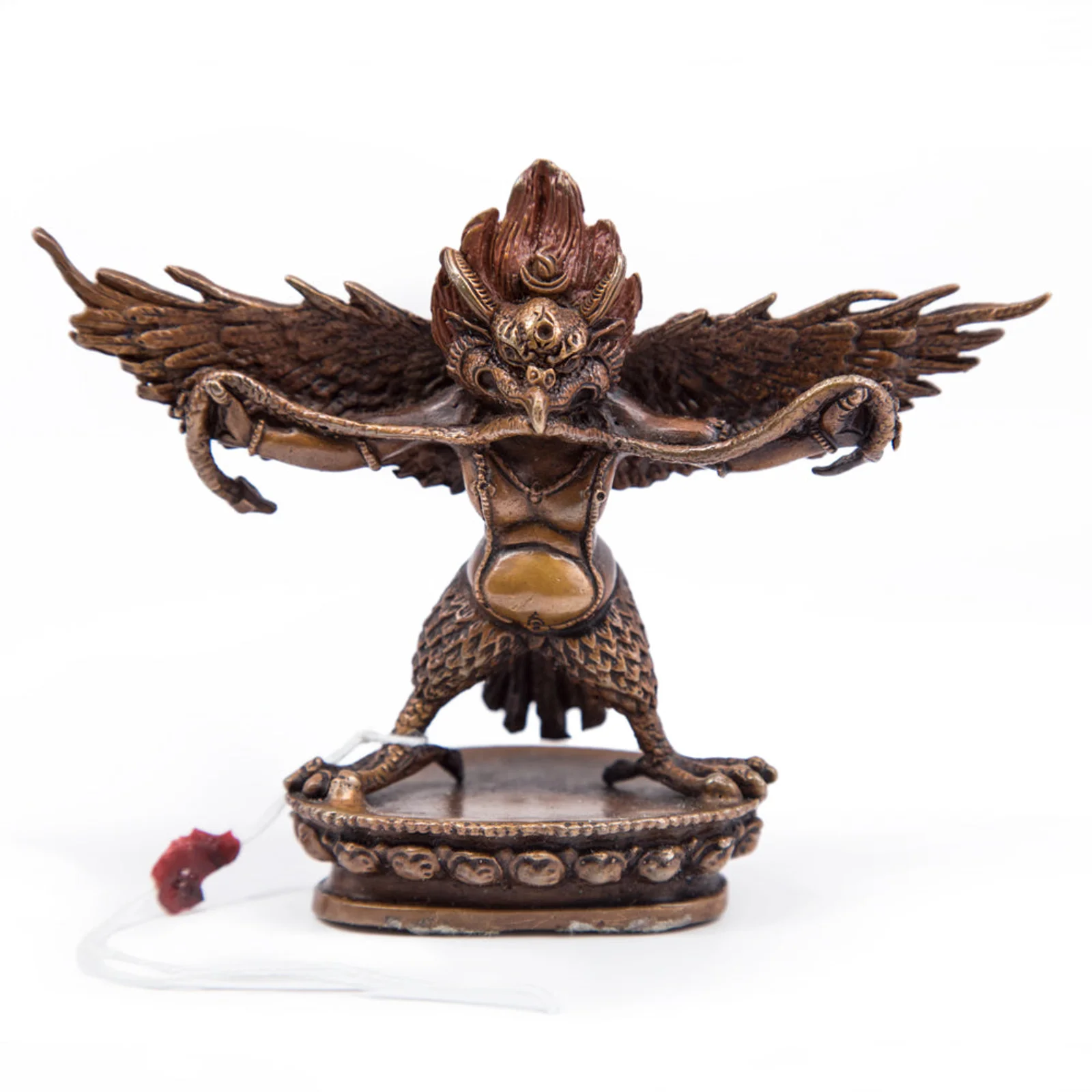
The rain has stopped. On the path the self-heal is no longer browning at the edges; it has gone to seed. I walk without looking for the mountain. There is none to find.
What the three documents refused together was never only the sphere. It was the entire architecture of elsewhere: the higher that must descend, the lower that must climb, the stored that must be handed across, the summit that must be held by someone. Once those are gone, what remains is not a flattened world. It is a world whose every surface already carries the whole it cannot display, and whose every apparent other is already the field in another configuration.
The wing does not beat toward a destination. It meets the air that is already there. The air does not rise to meet the wing. They discover, in the meeting, that neither was prior. The lift is not given and not taken. It is the condition that appears when two movements consent to be one movement seen twice.
On the cushion the false point still tries to form. In the meeting with another the false boundary still tries to hold. Both are the same refusal of magnification. Both dissolve under the same gaze: look until the locus that seemed to anchor everything is seen to have no independent standing. Then the wing is already extended. The benefit has already moved. The rainbow is already the ordinary light read without the partition that would make it rare.
Nothing was postponed. Nothing was withheld. The only work that remains is the one that cannot be compelled: to keep the condition in which the field can recognize itself across what still looks like two, until even that looking softens and there is only the wet light on the near sill and the far peak, falling from no higher place, because there is no higher place left to fall from.
plum seed
on the dark path
the wing already open
————————————————————-
## To the Reader
These four pieces are released together, on a single day, as one upload. They are short, but they are meant to be read as a unit. Separated, each one leans on the others and loses its footing.
1. No One is Descending
2. The Garuda does not Climb
3. Benefit has no Location
4. Troubled
The work is personal, and it is written in the spirit of Śāntideva — not as a treatise that instructs from authority, but as a practitioner setting down, for the benefit of practice, what has become clear in practice. The *Bodhicaryāvatāra* never claims to improve upon what the buddhas taught; it claims only to arrange a few useful things for someone willing to walk. I claim less than that. The material here is original in the narrow sense that it arose directly from my own sitting, and not from a reading or a lineage assignment. It is protected under Any Note Press. Its publication here permits no commercial use. It is offered for the benefit of one's practice and for nothing else.
Dharma does not carry the work of the sciences, and the sciences do not carry the work of the dharma. They point toward views that rub against one another, and that sometimes seem to confirm one another — the field that is never empty, the surface that has no second side — but they do not share an object of attention. The physicist attends to what can be measured and repeated. The practitioner attends to the arising and cessation of grasping in this very moment, which can be neither measured nor repeated. When the two seem to meet, it is worth pausing to notice that they have only come near. I do not use one to prove the other. To do so would be to ask the dharma to carry a load it was never shaped to bear, and to ask physics for a consolation it was never able to give.
Where, then, does this sit? As a category it falls under what is now called Secular Buddhism. That literature has grown substantial in a generation — Stephen Batchelor's *Buddhism Without Beliefs* and *After Buddhism*, the naturalized accounts of writers such as Owen Flanagan and Robert Wright, and the wider network of teachers and groups who practice without the cosmological apparatus that traditional Buddhism takes for granted. I was influenced by Stephen Batchelor, and I owe his work and his example a debt I am glad to acknowledge here. What follows is not in his style, which is expert, historical, and progressive, recovering an early dharma from beneath its later accretions. Mine is neither historical nor reformist. So while this is the nearest category available to me, I want to say plainly why the fit is only partial.
The secular model, in most of its forms, does two things that I do not do. First, it demythologizes: it sets aside rebirth, the pure lands, the deities and the visions, treating them as cultural inheritance to be respected and then quietly retired. Second, and more deeply, it tends to naturalize — to make the dharma continuous with, and finally answerable to, a scientific account of one life in one material world. I follow the Prāsaṅgika method as rigidly as my understanding and competence allow, and that method forbids me both moves. Prāsaṅgika asserts no position of its own. It only draws out the consequences already hidden inside whatever position is set before it. It refutes eternalism, but it refutes with equal force the materialism that is offered to replace eternalism. *There is only this life, only this matter, only this brain* is a thesis like any other, carrying a self-nature it cannot defend under analysis. To adopt it as a foundation would be to abandon the very discipline that lets the analysis cut at all. So I cannot demythologize in good faith, because I cannot assert the metaphysics that demythologizing quietly requires.
This leaves a strange position, and I would rather name it than smooth it over. The Garuda of these pages did not descend from a scripture and was not reasoned into being. It arose in practice, as such things do, and I report it as practice — not as cosmology, and not as something to be explained away. I make no claims about its standing in any world. The work is secular in one sense only: it appeals to no institutional authority, it asks no one to believe anything in advance, and it rests its whole weight on what can be examined directly by anyone willing to sit. It is not secular in the other and more common sense of having already settled the metaphysical question in materialism's favor. On that question I hold, with the Prāsaṅgika, to silence.
The challenge I offer to the traditional models — chiefly to deferred buddhahood, and to the institutional control that has grown up around it — is meant respectfully. I honor the work done before me; I have been able to learn and to progress only because of it. I am not trying to update the dharma for this century. I am trying to say, as carefully as I can, what one practitioner found when the supports were removed.
If you have the occasion to find any of this helpful to your own practice, I would be glad to hear of it.