Trust
I had long been familiar with the luddite movement, though only in the vaguest sense. It wasn’t until reading Brian Merchant’s excellent book “Blood in the machine” that I fully appreciated both their historical context and relevance to today. They weren’t arbitrarily against technology or progress, as sometimes depicted, instead luddities had a keen understanding of the power of technology, and how it was being used to enrich the factory owners at the expense of their livelihoods.
Preceding the rise of luddism, was the enclosure act of 1773, followed by several amendments to expand said act. These laws took land that had been in the common domain, and put them in the hands of private landlords. Quite literally to enclose them with fences and walls, to keep the commoner out.
Doubtless there were many arguments in support of this process but by far the most striking in my mind was the popularization of the idea of “The tragedy of the commons” in 1883. Which suggests that common ownership would lead to degradation of such resources, thus the only solution is to keep them in private hands. A piece of propaganda that is entirely taken for granted and even quoted by well meaning individuals today.
The parallels between the enclosure of land in the 17th century and digital enclosure lead by AI companies today are many. Then land was the source of wealth, today it is information, and creativity.
 Information being ephemeral, they don’t need to physically lock it away, its enough to have consumed all that was created by humans; words, images, films, and audio. To undermine our ability to earn a livelihood producing more. Creating a de facto monopoly on creativity. In the same way that the theft of public land concentrated vast wealth in the hands of land and factory owners. The theft of human creativity is concentrating wealth in the owners of a handful of tech companies.
With parallels to the many competing for soul destroying factory jobs, today many are tempted to leverage AI tools to make a living. To put bread on the table.
Not only does this threaten countless creative endeavours, ending the livelihoods of the many, for the benefit of the few. It spells the end of trust.
Perhaps trust is not crucial when you are using AI to produce a limerick about your cat, even to turn it into a song. We have long understood that the written word in itself held no trust value, it was only by associating it with a real person or a reputable organization that trust could be assigned.
But the wholesale production of false imagery and speech represents a new paradigm. Seeing is believing, yet we can no longer believe what we see. For the purposes of this piece, I am primarily interested in imagery, in photos. Though the manipulation of all forms of human communication and creativity are already having major impacts on society.
Deepfakes have been around since ~2017, and the term was commonly used up until recently, when doubtless a marketing department coined something less controversial, generative AI.
So what do we do? How do we trust what we see, when it takes a matter of seconds to generate an image of anything.
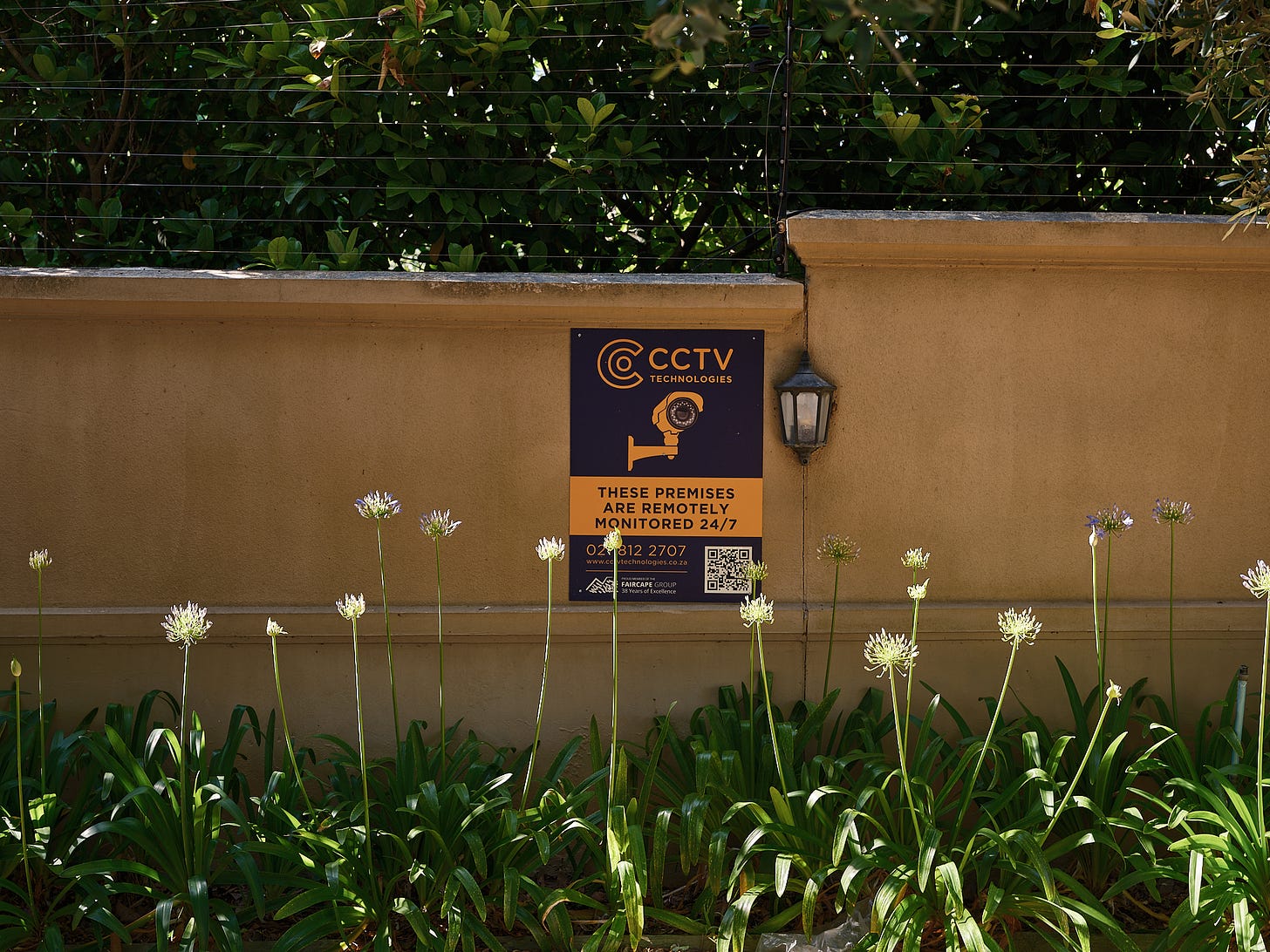
In conversation with other photographers, some feel that analogue methods are inherently more trust worthy. The fact that an analogue process was followed has a trust value greater than digital. Yet this quickly falls apart when we consider how media is both produced and consumed. Statistically speaking, no one is looking at images produced entirely via analogue means. Never mind that fakery has existed as long as photography. The simplest form today would be creating a negative from a digital source. Even those committing to an analogue process are more realistically using a hybrid one. Negatives are scanned into a computer, at which point they are susceptible to all the powers of generative AI. A picture of them holding the negative, the polaroid, you name it, also fakeable.
If there is any hope, its likely with better technology, not stepping back. Programs like c2pa promise to use cryptographic signatures in camera, to prove that the image was actually taken with a camera. I understand this will also use depth information to stop people taking pictures of generated content on a screen.
Will this save us entirely from the enclosure by big tech, not at all. We all need to be vigilant, voting with our wallets, by not using these platforms. To inform others of the risks, and how to be more media savvy. To ensure when programs like c2pa become wide spread, we know how to check. And we need to trust individuals and dare I say, organizations again. To ensure words and images come from reputable sources. No coloured check mark is going to solve that in a single swoop. The key is to build relationships. And maybe, just maybe, if someone says they are a luddite, its safe to assume they aren’t going anywhere near AI tools, unless its with a hammer.